Late antiquity
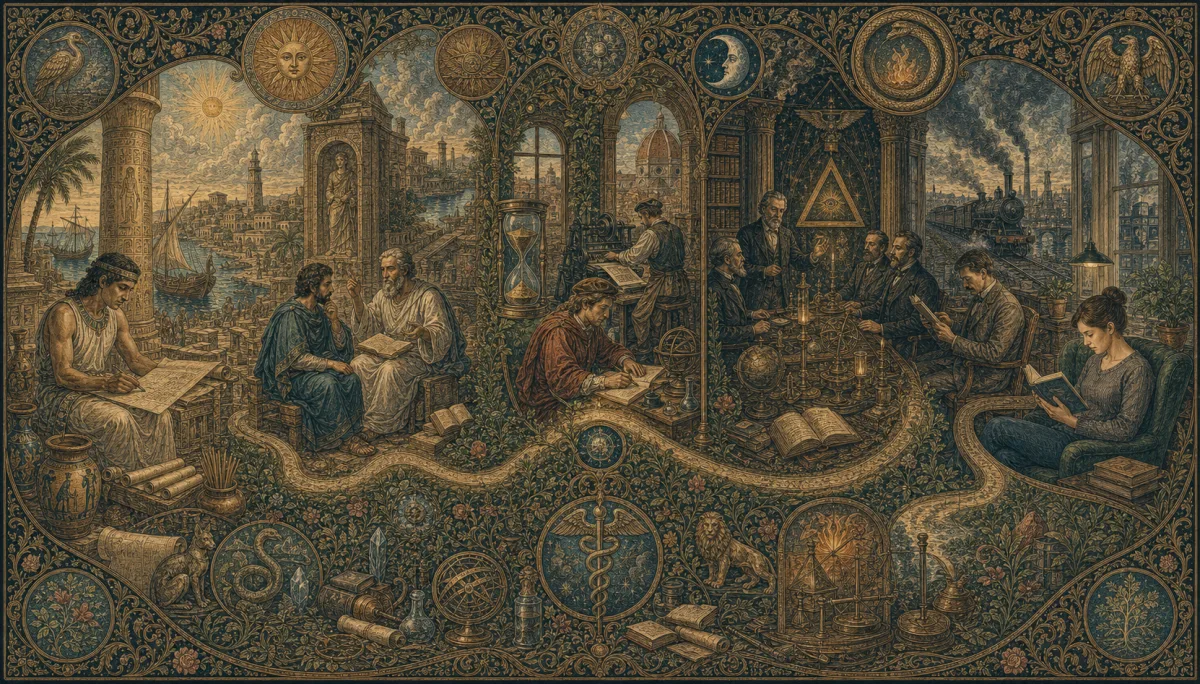
The philosophical Hermetica were composed largely in the early centuries CE in Roman Egypt. Dialogues such as those collected in the Corpus Hermeticum explore divine mind, cosmos, humanity, and rebirth.
Renaissance revival
Marsilio Ficino translated Greek Hermetic texts into Latin in the fifteenth century. They energized Renaissance debates about ancient wisdom, human dignity, theology, astrology, and natural philosophy.
Modern transformations
Later scholarship revised the dating of the texts. Rosicrucian, occult, New Thought, and modern spiritual movements reinterpreted Hermetic themes—one setting in which The Kybalion appeared.
Further reading
Compare this guide with the Seven Principles, consult the glossary, and use our curated resources to continue with primary texts and responsible scholarship.